
The Calendar That Looks Fine (But Isn’t)
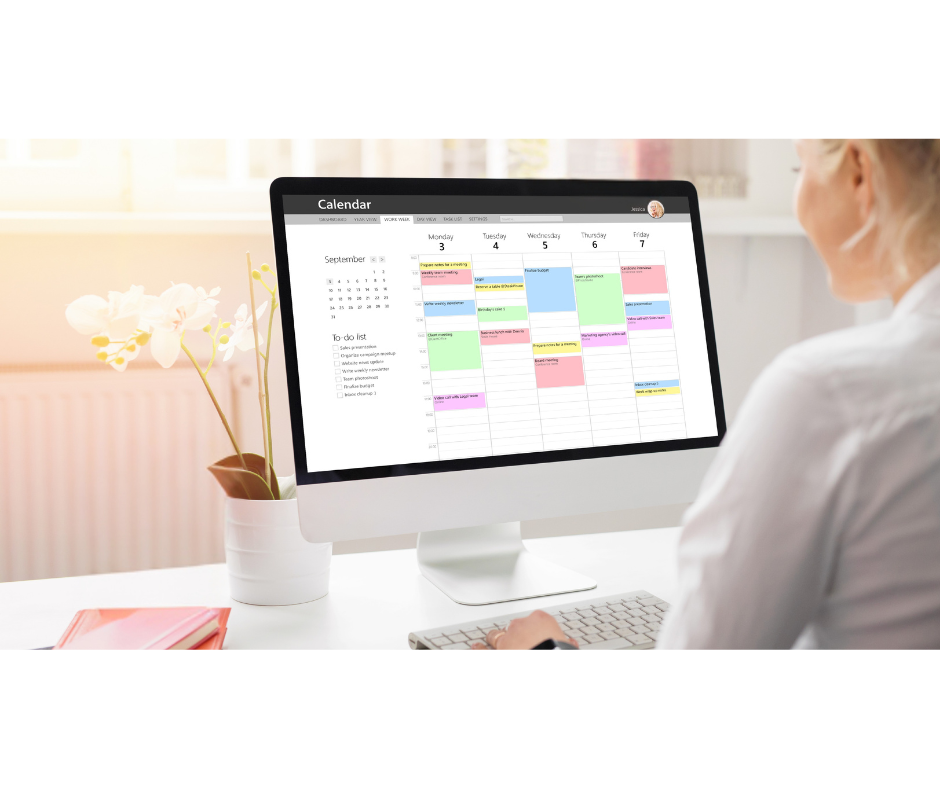
Your calendar looks productive. Full, but manageable. Color-coded, even (if you know me, you know I love a color-coded calendar). Yet you’re exhausted. You’re behind on doing the work that drives the business, and you’re wondering why you can’t seem to catch up.
When I review a calendar with consistent back-to-back meetings, the issue is rarely how full it is. It’s how the time is being used.
Meetings are stacked, leaving no space to reset. Decision-heavy conversations sit back-to-back. Important work gets pushed to the very beginning or end of the day, or onto weekends, taking time away from friends and family. Over time, the calendar stops supporting the person using it and starts working against them.
This kind of misalignment is easy to miss when you’re in the middle of a busy week. When you’re moving from meeting to meeting, the calendar becomes something you react to rather than something you intentionally shape.
What to look for
During a weekly review, look for where time is quietly being lost. Preparation time that doesn’t exist. Follow-up work that has nowhere to land. Focus time that gets broken up by short calls or quick check-ins. Look beyond a single week, certain days that are consistently overloaded, recurring meetings that stay on the calendar even when priorities have shifted, and little or no protected time left for thinking, planning, or catching up before the next demand arrives.
The starting point is always the same: review the calendar and ask whether it’s aligned with what you’re actually trying to accomplish. When it isn’t, rebuild it around your goals and priorities, which usually means fewer meetings, protected time for focused work, and space for the things that keep getting pushed aside.
What this looks like in practice
One long-time client is a good example. When we first started working together, they were overwhelmed by constant interruptions, frequent 1:1s with staff, and a complete lack of focus. Most of their week was being driven by urgency rather than intention. Because the company was actively raising funding, investor conversations required a very different level of focus than internal or administrative meetings, so we rebuilt the week around that.
This is just one example of what a priority-driven calendar can look like in practice. Every client looks different. Here’s what we landed on for them:
- Monday: internal meetings
- Tuesday & Thursday: investor calls 9–11 and 3–5, with time in between protected for focused work and follow-up
- Wednesday: meeting-free
- Friday: standing 20-minute production team check-in; interviews and referral calls in the afternoon
The number of meetings didn’t change dramatically, but the structure did. Interruptions decreased, focus improved, and the calendar began to support work rather than interrupt it.
It’s a quiet shift, but one that makes the week feel calmer and the work more manageable, not because there’s less happening, but because time is being used with intention.
If your calendar looks fine on paper but doesn’t feel that way in practice, I’d love to help.